A Sunday in Hell, in Danish, Because of a Book
I do not condone piracy, so you shouldn't click this link to a HD upscaled Dutch with English subtitles
And you shouldn't click this link for English, but with lower quality (VHS, maybe DVD, it's 4:3, this is the one I mostly watch, on legally aquired DVD of course). I now realise it's worse due to missing translations/subtitles for conversations that the original Danish has)
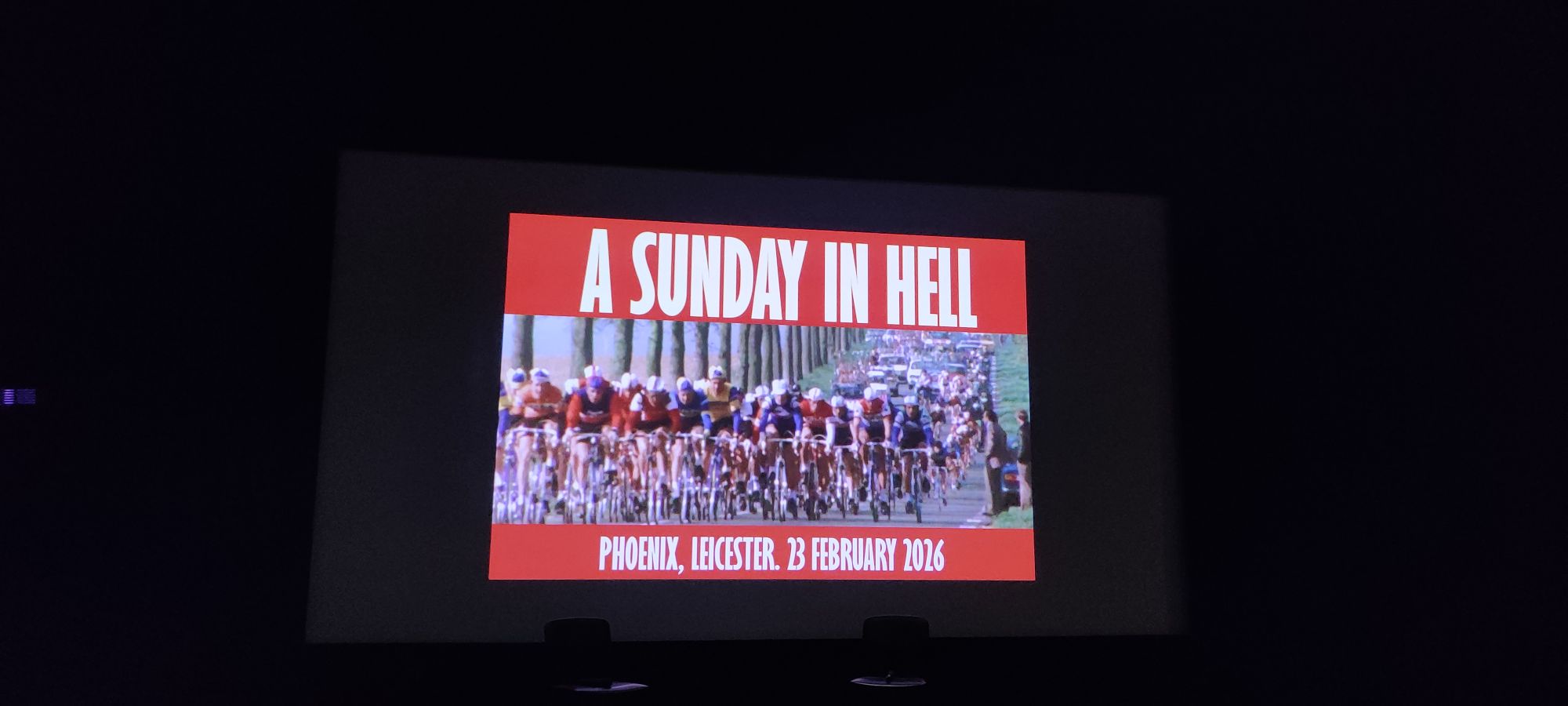
A Sunday in Hell is one of my most fond memories. I might watch the film most years before Paris-Roubaix, and I might have watched it countless times as a kid, but I can never remember what happened the next time. All I know is that every time I wash my bike, cleaning the chain with a degreaser covered brush, I think back to that mechanic at the start of the film washing the bike.
This year it was on at the cinema, on the big screen, and my Dad offered to take me for my birthday, which was nice :3
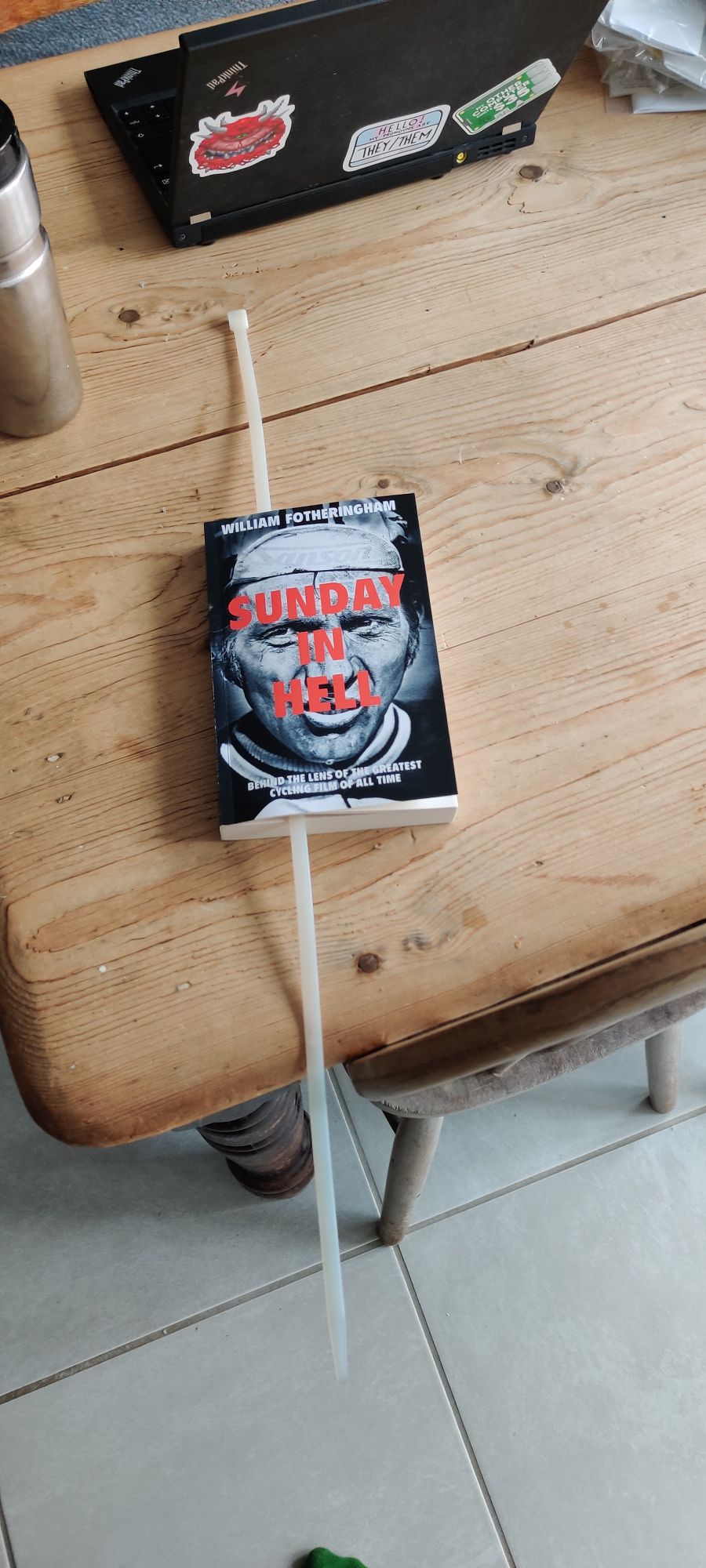
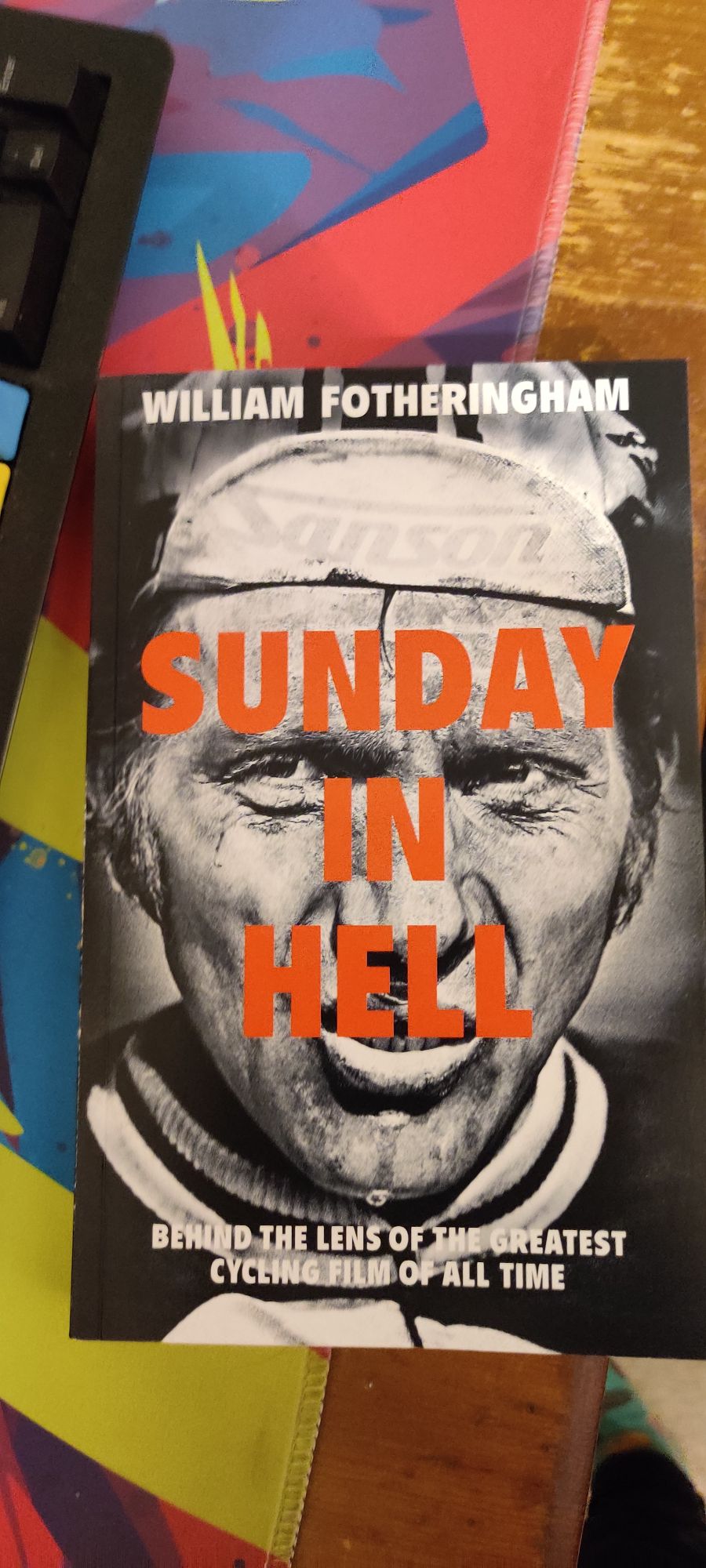
What I didn't know was that it was due to this guy William Fotheringham, who in 2018 wrote the book "Sunday in Hell, behind the lens of the greatest cycling film of all time" (a copy of which I now own, signed by the author :3 )
I feel like I should talk about what the film is and what it's about, but that's what the book does and I've only read the first bit, and I barely remember the film so I'd rather tell you why I think you should watch it yourself.
This isn't a film about bike racing, or cycling, or sport, this is a film about people and stories and places. It just happens to be following a bike race. The race doesn't matter in the end. We follow certain riders in their preparations, we follow certain other riders through the race, and in the end none of them end up winning (apparently much to the annoyance of Jorgen Leth, the director, who wanted one of the larger than life characters like Merckx or Moser to win)
I love this film because it shows off all the bits of cycling that I do, rather than the racing that I never made it to. It makes me want to ride, and enjoy cycling as a sport. The cobblestones are beatiful, as they hammer the riders to jelly, the pave longstanding as my favourite surface to ride. It's smoother than bridletracks, to the point where I'll seek out the roughest lines on the pave just to feel something.
The dust clouds, the spectators, the race, the cafes, being asked to watch this film and think about it, instead of just sitting back and enjoying the world, it was nice, but next time I watch I'll just enjoy the world again. It's the world of my childhood where the only thing that mattered was the bicycle.
This film brings me into a time where my Dad was barely lucid, it really does take you to a dusty Sunday in April in northern France, between a town just outside Paris, and a velodrome just outside Roubaix.
So now I should do the reason I wrote this post, to write down the things that happened at the showing that weren't in the film, the questions asked.
One was from me, about bikes of the time vs bikes of now. Now you can buy the top spec bike, and it all comes from a mould, so the top riders have the same as their helpers (minus preferential treatment on small details, and mechanics working on their bikes daily instead of a domestique maybe getting a full rebuild every 3 days of the Tour). I asked how big the difference in bikes between a top rider on a team like Merckx would be to his teammates. Riders in the 70s got their bikes hand made by certain frame builders like Colnago (now a company owned by Saudi, so they're shit compared to their heritage same as Campagnolo, the gears all riders would have ran in 76). Lower tier riders got off the peg kit, the kind plebs like us could buy. Now a top tier rider gets the same as everyone, everything is out the mould, if only a better layup for the pros compared to us.
William Fotheringham answered that it's much different now, that bikes back then were much the same because the custom built frames weren't so much better than the top of the line off the peg (I guess because it's the same tubing, just craftsmanship and the sizing being specific) and other than custom frames, and maybe a specialist tyre for the cobbles (that Moser had, mentioned in the film, to protect against punctures) the kit was otherwise the same. Within teams it may now be more equal, but between teams it's vastly different.
Another question was about the music, which Fotheringham replied that it was very experimental. Most of the people coming in to do this movie weren't cycling based, they were artsy film people, and it shows, yet they captured cycling so perfectly that cyclists love it. There's a section where the musical director had a set of 8 or so singers from the Danish choir sing "Pave", "Roubaix", and "Paris" (Paris being "Paree") and then layered it over and over and over again until it sounded like thousands.
A lot of the music was also folley, there's definite sections where all you can hear are chains and cogs, but you're in a car, or on a motorbike. Apparently only a few of the cameras had soundmen with them (in the cafe, at the feedzone, at the end), and the rest had no sound.
There's themes, which I never noticed until it was brought up. There's a Merckx theme, a Moser theme, a De Vlaminck theme, and a "going fast" theme which is a wobbleboard and timpany.
Fotheringham has been to many bike races and covered cycling for years and years as a reporter, and he said his favourite race was Paris Roubaix because of the access the press have to the riders in the showers at the end, and that they were always happy to talk, no matter how bad they did. It's a strange thing, reporting from a showers, naked cyclists trying to clean French mud out their eye sockets, but that's how it was. In fact winning riders get their names on the shower cubicles.
One of the biggest changes Fotheringham has seen in cycling is riders no longer using those, and just heading to busses since the late 90s. Some riders will use the showers, just to say they did it, but these usually aren't winning riders.
Another of the biggest changes in the sport for Fortheringham was the start of the 1992 Tour de France, as this is where we see Big Mig Indurain start the process of "Winning at the tour means missing the classics" and the modern bredth of cycling only being about the Tour, or specialists who don't race both. It's still only a rare few who race the classics and the grand tours, and even fewer who can win both (and unfortunately the guy who wins them both now is on a shitty team).
This combined with the on bike nutrition - (which to Fotheringham is more important than the out of race nutrition which starts near the beginning of the film with "a bloody steak is the best breakfast for a racing cyclist" while now we're on rice, rice, more rice, and pudding rice for when you're bored of rice and pasta = faster) - is the biggest change in the last 50 years. In 76 there was 2 feed zones, and the water was just water, and the food was a jam or ham sandwich.
3 riders in fact were to race Roubaix on 3 pasties from a local shop as the JOBO team car had its tyres slashed by protesters (who were protesting the race organiser, L'Equipe, and its owners, from laying off many of the printing press workers. La Parisien Libere, the runners of the race and owners of L'Equipe funded the film, which I think is amazing because it's great art and great for unions). The film mentions that it's an "unexpected" stoppage for a protest, though it would become more and more common through the 80s, especially in the Tour de France and with farmers.
Food now is gels and sugar and perfection, though it's perfectly normal for recreational cyclists to use the old methods and do well. Gels are great, but sometimes nothing beats some sugar lumps. You can put isotonic mix in your bottles, but I'll run squash and sugar and a pinch of salt, and the old boy on a CAADX with cantis will eat a marmite sandwich, have plain water in his bottle, and lap you at the local CX.
The vibe I got from the event was a bunch of people who love cycling, watching a film about cycling, with other people who love cycling, and asking questions of a man who lives cycling. I've finished the first prologue chapter of the book as I'm writing this, and it's great.
Maybe this will be the third book I've read in my life, and maybe I'll read those other cycling books I've got (if I can get into reading I'd really like to, as there's so many great cycling stories told on paper, and Ned Boulting deserves some money for a book)
Watching this film made me want to get back on my bike though, plus a little sun that's coming soon I should be happily back out again soon enough, once my rear wheel is fixed (hopefully that doesn't cost me an arm and a leg)
Enjoy this makeshift bookmark.